 how-to
Microneedling for Deep Facial Wrinkles: What to Expect
Table of Contents
- How Microneedling Targets Deep Facial Wrinkles
- Realistic Results for Deep Wrinkles and Forehead Lines
- Microneedling Treatment Results Timeline
- Professional Microneedling vs At-Home Microneedling
- Microneedling Side Effects and Safety Guidance
- Alternatives to Microneedling for Deep Wrinkles
- Who Is a Good Candidate for Microneedling
- Frequently Asked Questions
Last Updated: October 17, 2026
How Microneedling Targets Deep Facial Wrinkles
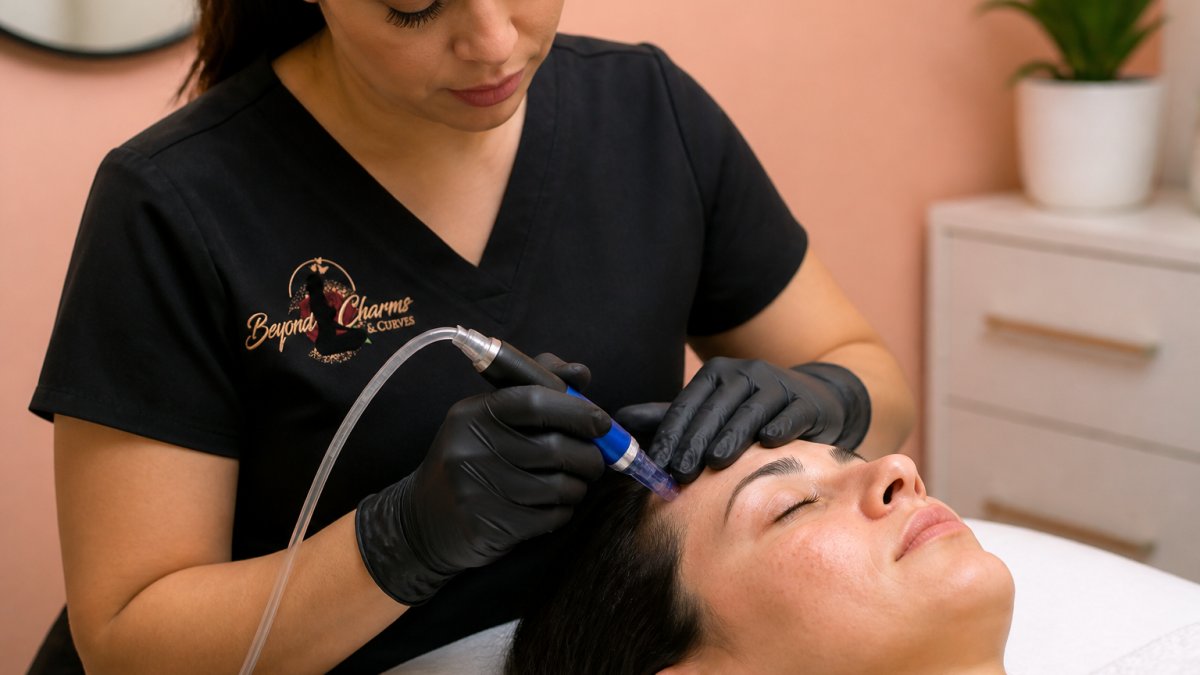
Microneedling for deep facial wrinkles works by creating tiny, controlled punctures in the skin that trigger the body's own repair response. At Beyond Charms & Curves, we explain this process to every client before treatment, because understanding it sets realistic expectations. The device passes over the skin with fine needles that reach the dermis, the layer where collagen and elastin live. That controlled puncturing signals the skin to rebuild.
Collagen Induction and Skin Repair
Collagen induction is the core of this treatment. When needles create micro-wounds, the skin responds by producing fresh collagen and elastin over the following weeks. This process, sometimes called percutaneous collagen induction, slowly thickens the skin and softens wrinkle depth. It is gradual, not instant. The repair happens beneath the surface long after the redness fades.
Realistic Results for Deep Wrinkles and Forehead Lines
Honest answer first: microneedling softens deep wrinkles and forehead lines, but it rarely erases them. Fine lines respond best. Deep, established wrinkles that have been set for years improve more modestly. Think of it as improving skin texture and firmness rather than turning back the clock completely.
Why the difference? Deep wrinkles form from more than one cause. Some come from repeated muscle movement, like forehead lines that appear when you raise your brows. Others come from collagen loss and volume shifts that happen with age, like the folds around the mouth. Microneedling works on the skin's surface and upper layers. It rebuilds collagen and thickens the skin, which softens the edges of a wrinkle and improves how light reflects off it. It does not relax the muscle underneath, and it does not restore lost volume. That is why a deep fold from volume loss may look only slightly better, while a crepey patch of texture can look much smoother.
Here is a realistic breakdown by wrinkle type:
- Fine lines: Often show clear, visible improvement after a full course.
- Forehead lines at rest: Soften over a full treatment course, especially when combined with treatments that address muscle movement.
- Deep-set wrinkles: Improve in texture and firmness, not fully removed. Expect a softening effect, not a fill.
- Skin tone and texture: More even, with a smoother surface and better light reflection.
What most guides miss is that results vary widely by age, skin health, and how deep the wrinkles are. A personalized plan matters more than a generic promise. Two people with the same wrinkle depth can get different results based on how well their skin heals, how much sun damage they have, and how consistent they are with aftercare.
It also helps to know what studies actually measure. Most clinical research on microneedling looks at wrinkle severity scales, skin texture, and patient satisfaction, not at whether a wrinkle disappeared. A study might report that a group of participants saw a one-point improvement on a wrinkle scale. That is a real change, but it is not the same as a wrinkle-free result. Promotional before-and-afters often use lighting, angles, and makeup to exaggerate change. Ask your provider what outcome they expect for your specific wrinkle pattern, and be wary of anyone who promises to erase deep lines.
A common pattern among practitioners is that clients with deep wrinkles see the best change when microneedling is part of a plan that also addresses muscle movement or volume loss. Microneedling improves the canvas; it does not redraw the picture. Setting that expectation up front is the difference between a satisfied client and a disappointed one.
Microneedling Treatment Results Timeline
The microneedling treatment results timeline runs in stages. You will see mild redness and a tight feeling for a day or two. Real change shows up later, as new collagen builds. Most people notice smoother texture within a few weeks, with fuller results after a full course of sessions. Maintenance treatments keep the gains. Collagen remodeling is slow, so patience is part of the process.
Professional Microneedling vs At-Home Microneedling
Professional microneedling vs at-home microneedling is not a fair fight. In-office treatment uses medical-grade devices, controlled needle depth, and a trained provider. At-home dermarollers reach shallower depths and carry real risk if used carelessly. For deep facial wrinkles, professional treatment is the safer, more effective path. At-home tools can help with light maintenance, but they cannot match clinical results.
| Factor | Professional | At-Home |
|---|---|---|
| Needle depth | Controlled by provider | Shallow, fixed |
| Safety oversight | Licensed professional | Self-applied |
| Best for | Deep wrinkles, firmness | Light upkeep |
| Risk of scarring | Lower with training | Higher if misused |
Microneedling Side Effects and Safety Guidance
Common microneedling side effects include redness, mild swelling, and irritation that fade within days. Some people also see minor bruising or pinpoint bleeding during treatment, which is normal with deeper settings. Serious risks like infection or scarring are uncommon when treatment is done with clean technique and FDA-cleared devices. We follow strict protocols to lower these risks. Skip treatment on active breakouts, open skin, or irritated areas. Tell your provider about any medications or skin conditions first. Safety starts with an honest consultation.
Needle depth is the single biggest safety factor, and it is where at-home devices get people into trouble. In a professional setting, a provider chooses depth based on the treatment area. The forehead and around the eyes are thin-skinned and need shallower settings. The cheeks and jawline can handle more. A trained provider adjusts depth session by session based on how your skin responds. At-home rollers and pens typically have a fixed depth, and users often press harder to try to get more results. That is the wrong move. More pressure does not mean better results, it means more trauma, more risk of scarring, and a higher chance of infection.
A common pattern in online accounts is someone using a 1.5 mm at-home roller on deep wrinkles and ending up with prolonged redness, tracking marks, or a skin infection. A 1.5 mm needle is long enough to reach the dermis, which is exactly why it should not be used casually at home. The FDA has cleared certain microneedling devices for home use, but clearance is not a guarantee that a device is right for your skin or your wrinkle depth. If you use an at-home tool, follow the manufacturer's instructions exactly, never share the device, disinfect it before and after, and stop if you see signs of infection.
Watch for these warning signs after any microneedling session:
- Spreading redness or warmth that gets worse after 48 hours
- Pus or yellow crusting at treatment sites
- Fever or chills
- Persistent tracking marks or lines that do not fade
- New scarring or raised bumps
If any of these appear, contact a healthcare provider. Do not treat over an active infection or try to "push through" irritation.
Safety also means being honest about who should not be treated. Microneedling is not recommended over active acne, eczema, psoriasis, or any open wound. People with a history of keloid scarring, bleeding disorders, or certain skin conditions should get medical clearance first. If you are pregnant or nursing, talk to your provider before booking. A good consultation screens for these issues before any needle touches your skin.
Alternatives to Microneedling for Deep Wrinkles
Alternatives to microneedling for deep wrinkles include Botox, dermal fillers, skin tightening, and IPL photofacials. Each has pros and cons. Botox relaxes the muscles that form forehead lines. Fillers restore volume and soften folds. Skin tightening treatments focus on firmness. Microneedling pairs well with these for a combined plan. The right choice depends on your skin, goals, and how deep the wrinkles are.
- Botox: Best for dynamic lines from movement
- Fillers: Best for volume loss and folds
- Skin tightening: Best for laxity and firmness
- Microneedling: Best for texture and overall rejuvenation
Who Is a Good Candidate for Microneedling
Good candidates are generally healthy adults with mild to moderate wrinkles who want a minimally invasive option with little downtime. If you have deep, established wrinkles, microneedling can still help, often alongside other treatments. A consultation confirms suitability. We tailor each plan to your skin and goals.
Frequently Asked Questions
Can microneedling improve deep facial wrinkles?
Microneedling can soften deep facial wrinkles, but it rarely erases them completely. The controlled puncturing triggers collagen and elastin production, which thickens skin and improves texture over time. For deep, established lines, most people need a series of professional sessions and may combine microneedling with skin tightening or other treatments for a more noticeable change. A consultation helps set realistic expectations based on your skin and wrinkle depth.
How long does it take to see results from microneedling?
The microneedling treatment results timeline varies. You may notice a temporary glow within a week as redness fades, but real changes in skin firmness and wrinkle appearance usually show after four to six weeks. Collagen remodeling continues for months, so the best visible improvement often appears after a full course of three to six sessions spaced several weeks apart. Deep wrinkles typically need more sessions than fine lines.
What are the side effects of microneedling?
Common microneedling side effects include redness, mild swelling, and irritation for one to three days, similar to a mild sunburn. Small pinpoint bleeding can occur during treatment. Less common risks include infection, scarring, and changes in skin tone, especially with at-home devices used incorrectly. Following aftercare instructions, avoiding active skin irritants for a few days, and choosing a trained professional reduce these risks.
Is professional microneedling more effective than at-home microneedling?
Professional microneedling uses deeper needle depth and stronger devices under trained supervision, which generally produces more noticeable results for deep wrinkles. At-home dermarollers reach only the surface layers and carry higher risk of irritation or infection if not cleaned properly. For safety, at-home tools should be used cautiously and sparingly. Anyone with deep wrinkles or skin concerns should ask a licensed provider which option fits their goals.
Deep facial wrinkles take a plan, not a single session. At Beyond Charms & Curves, we build customized treatment plans around your goals using FDA-cleared devices and physician-guided care. Our team pairs microneedling with options like skin tightening and dermal fillers when they fit your needs. Book your consultation and get a plan made for your skin.