 how-to
How to Prevent Wrinkles in Your 30s: A Simple Guide
Table of Contents
- Start Now: How to Prevent Wrinkles in Your 30s
- Build a Skincare Routine for Wrinkles in Your 30s
- Retinol for Beginners in Your 30s: How to Start Without Irritation
- The Best Sunscreen for Preventing Wrinkles (and How to Use It)
- Microneedling for Fine Lines: What to Expect
- Lifestyle Habits That Support Skin Health
- When to See a Professional About Wrinkles
- Conclusion: Small Steps, Visible Results
- Frequently Asked Questions
Last Updated: October 5, 2026
Start Now: How to Prevent Wrinkles in Your 30s
Wrinkles form slowly, and your 30s are the decade when daily habits start to show. Learning how to prevent wrinkles in your 30s comes down to three things: sun protection, a steady routine, and patience. At Beyond Charms & Curves, we see the difference between people who start early and those who wait.
Prevent wrinkles in your 30s by protecting your skin from UV exposure, keeping it moisturized, and using proven active ingredients like retinoids. These steps slow collagen loss before fine lines become deep lines.
Why Your 30s Matter for Skin Aging
Collagen and elastin keep skin firm and springy. Your body makes less of both starting in your late 20s. Sun exposure speeds this up.
So the habits you build now decide how your skin looks at 50. This is the decade where small choices compound.
Prevention vs. Treatment: Realistic Timelines
Prevention works slowly. Treatment works faster but costs more and carries more risk.
- Prevention: months to years, low risk, low cost
- Treatment: days to weeks, higher cost, needs a provider
- Best results: both together
Build a Skincare Routine for Wrinkles in Your 30s
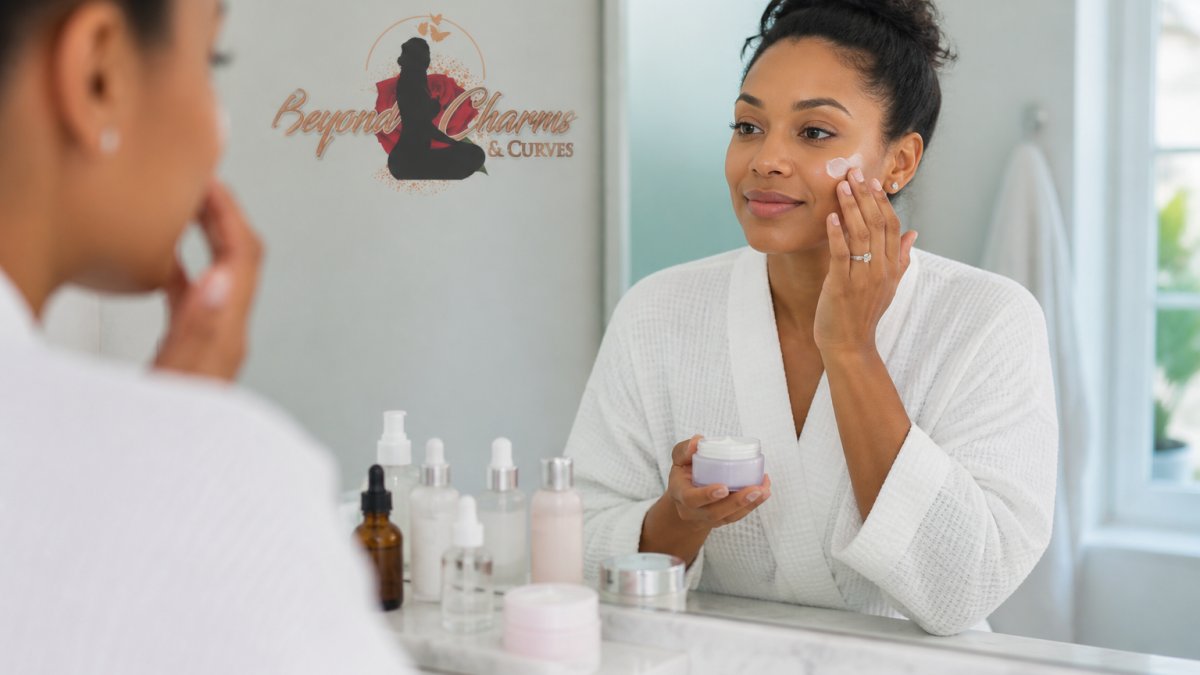
A simple skincare routine for wrinkles in your 30s does not need ten products. It needs four, used daily.
Morning Routine: Cleanse, Protect, Hydrate
- Gentle cleanser. Wash with lukewarm water. Hot water strips the skin barrier.
- Antioxidant serum. Vitamin C helps shield skin from free radicals.
- Moisturizer. Apply while skin is still damp to lock in hydration.
- Sunscreen. Broad-spectrum, SPF 30 or higher, every single day.
Evening Routine: Repair and Nourish
- Remove makeup. Use a gentle cleanser or micellar water.
- Cleanse again. A soft second wash removes sunscreen and grime.
- Retinol or moisturizer. Start retinol two nights a week.
- Eye cream. The eye area has thin skin that shows fine lines first.
Retinol for Beginners in Your 30s: How to Start Without Irritation
Retinol is one of the most studied over-the-counter ingredients for fine lines and skin texture. It works by speeding up cell turnover and supporting collagen production over time. It is not a quick fix, and it is not for everyone.
Most irritation comes from using too much, too often, too soon. A slow start protects your skin barrier and makes it far more likely you will stick with it.
A Beginner Protocol
- Start with a pea-sized amount, twice a week at night.
- Apply to dry, clean skin. Wait a few minutes after cleansing.
- Use the sandwich method: moisturizer, then retinol, then moisturizer. This lowers irritation without blocking the retinol's effect.
- Skip nights when skin stings, flakes, or looks red. Give your barrier a break.
- Build up slowly. Add one night per week every few weeks, aiming for nightly use over 8 to 12 weeks.
What to Expect
- Weeks 1 to 4: possible flaking, dryness, or mild redness as skin adjusts.
- Weeks 4 to 12: texture often starts to look smoother.
- Months 3 to 6: fine lines may begin to soften. Deep folds will not disappear.
Retinol is a long game. Consistency over months matters more than strength.
Safety and Who Should Skip It
- Pregnancy and breastfeeding: avoid retinoids unless a doctor says otherwise. Prescription retinoids in particular carry known risks.
- Very sensitive or irritated skin: repair your barrier first with a simple moisturizer routine before adding retinol.
- Active eczema or rosacea flares: talk to a dermatologist before starting.
- Sun sensitivity: retinol makes skin more sun-sensitive. Daily sunscreen is not optional while using it.
When to See a Dermatologist
If over-the-counter retinol causes persistent irritation, or if you want stronger options, a dermatologist can discuss prescription retinoids and whether they are right for your skin. Prescription formulas are stronger and need professional guidance.
The Best Sunscreen for Preventing Wrinkles (and How to Use It)
UV exposure is the single biggest driver of visible skin aging. Most of the fine lines and uneven tone people notice in their 40s and 50s trace back to daily sun exposure accumulated in their 20s and 30s. That makes sunscreen the highest-return step in any wrinkle-prevention routine. (Source: the National Institutes of Health's information on retinoids)
The best sunscreen is the one you will actually wear every day. Texture matters more than brand. If a formula feels greasy or pills under makeup, you will skip it, and skipped sunscreen does nothing.
What to Look For
- Broad-spectrum coverage. This means protection against both UVA (aging) and UVB (burning) rays. In the U.S., look for "broad spectrum" on the label.
- SPF 30 or higher. SPF 30 blocks about 97% of UVB rays when applied correctly. Higher SPF adds a small margin, not a license to skip reapplication.
- A texture you like. Gel, lotion, or cream, whichever suits your skin type. Oily skin often prefers lightweight gels; dry skin does better with cream formulas.
How Much to Apply
Most people apply far less than they should, which means they get a fraction of the labeled SPF. A common guideline from dermatology organizations is:
- Face and neck: about a nickel-sized amount, or the length of two fingers
- Full body: about one ounce, roughly a shot glass
Apply sunscreen as the last step of your morning routine, after moisturizer. Let it settle for a few minutes before makeup.
When to Reapply
- Every two hours when you are outdoors
- Immediately after swimming, heavy sweating, or toweling off
- Any time you have been outside longer than planned
Commonly Missed Areas
The neck, the backs of the hands, the ears, and the hairline age just as fast as the face and are easy to forget. Extend your face sunscreen down your neck and onto your hands each morning. If you drive often, remember that UVA passes through car windows.
Do Not Rely on Makeup SPF
Foundation or tinted moisturizer with SPF is a nice bonus, but most people do not apply nearly enough to reach the labeled protection. Treat makeup SPF as a supplement, not a replacement.
Microneedling for Fine Lines: What to Expect
Microneedling for fine lines uses tiny needles to create controlled micro-injuries. Skin responds by building collagen. It works best on early fine lines, not deep folds.
Expect mild redness for a day or two. Results build over several sessions. A licensed provider should assess your skin first.
Lifestyle Habits That Support Skin Health
No serum beats sleep, food, and movement. Skin repair happens mostly while you rest.
Sleep, Stress, and Circulation
Poor sleep and high stress raise cortisol, which breaks down collagen. Aim for 7 to 9 hours. Exercise boosts healthy circulation, which feeds skin.
Diet and Antioxidants
- Berries and green tea: antioxidants that fight free radicals
- Fatty fish: omega-3 fatty acids for the skin barrier
- Water: supports hydration from the inside
- Less alcohol and added sugar
When to See a Professional About Wrinkles
See a licensed provider when over-the-counter products stop helping. Deep lines, volume loss, or stubborn texture often need in-office care.
At Beyond Charms & Curves, we build customized treatment plans using FDA-cleared devices. Options include microneedling, IPL photofacials, skin tightening, and injectables like Botox and dermal fillers. Every plan starts with a consultation, so you know what to expect before you commit.
Conclusion: Small Steps, Visible Results
Preventing wrinkles takes consistency, not perfection. Protect your skin daily, start retinol slowly, and support it with sleep and good food.
When you want more than at-home care, Beyond Charms & Curves offers personalized plans with FDA-cleared devices and professional-grade skincare lines. Book a consultation and build a routine that fits your skin and your schedule.
Frequently Asked Questions
Is 35 too late to start retinol?
No, 35 is a good time to start retinol if you have not used it before. Your skin still repairs itself well in your 30s, so you can see improvements in fine lines and skin texture. Start with a low-strength retinol two nights a week. Use a pea-sized amount for your whole face. If your skin feels dry or irritated, take a break and use a moisturizer. Most people can slowly build up to using it more often over a few months.
What skincare routine helps prevent wrinkles in your 30s?
A simple routine works best. In the morning, use a gentle cleanser, an antioxidant serum, a moisturizer, and a broad-spectrum sunscreen with SPF 30 or higher. At night, cleanse again, apply a retinol product if your skin tolerates it, and finish with a richer moisturizer. This routine supports collagen, protects your skin barrier, and helps prevent fine lines. Keep it consistent, because daily habits matter more than using many products.
How often should you use sunscreen to help prevent wrinkles?
Use sunscreen every day, even when it is cloudy or you are mostly indoors. UV exposure is a leading cause of premature aging, including wrinkles and dark spots. Apply a broad-spectrum sunscreen with SPF 30 or higher in the morning. Reapply every two hours if you are outside. If you sit near a window, you still get UVA exposure, so daily use matters. This is one of the most effective steps for preventing wrinkles.
When should you consider professional skin treatments for wrinkles?
Consider professional treatments if you have fine lines that do not improve with a good home routine, or if you want faster results. Options like microneedling, skin tightening, or Botox can help with fine lines and skin texture. A licensed provider can assess your skin and recommend a plan. At Beyond Charms & Curves in Bakersfield, treatments are tailored to your goals, and a consultation helps you decide what is right for you.