 blog
blog
Non-Invasive Skin Tightening: Best Treatments in 2026
Table of Contents
- How Non-Invasive Skin Tightening Works
- Top Non-Invasive Skin Tightening Options
- Is Skin Tightening Painful?
- How Long Does Non-Invasive Skin Tightening Last?
- Preparing for a Medical Spa Skin Treatment
- What to Expect: Results and Recovery Timeline
- Choosing the Right Treatment for Your Skin
- Frequently Asked Questions
Last Updated: September 20, 2026
Non-invasive skin tightening treatments have become a go-to solution for people wanting to address sagging skin and loss of elasticity without surgery. At Beyond Charms & Curves, we help patients in the area understand which non-invasive skin tightening options work best for their unique goals and skin type. Whether you're dealing with fine lines, wrinkles, or overall skin laxity, modern treatments can deliver noticeable results with minimal downtime.
How Non-Invasive Skin Tightening Works
Non-invasive skin tightening uses energy-based technology to stimulate collagen production and tighten the dermal layers beneath your skin. Controlled thermal energy or focused waves trigger your body's natural healing response, causing immediate tissue contraction and signaling new collagen and elastin production over weeks and months. This collagen remodeling creates the lifting and firming effect you see over time.
Radiofrequency uses electrical current, ultrasound sends sound waves, and laser uses light energy. All work on the same principle: heat stimulates collagen, which tightens skin. The choice depends on your skin type, treatment area, and downtime tolerance.
Top Non-Invasive Skin Tightening Options
Radiofrequency Skin Tightening
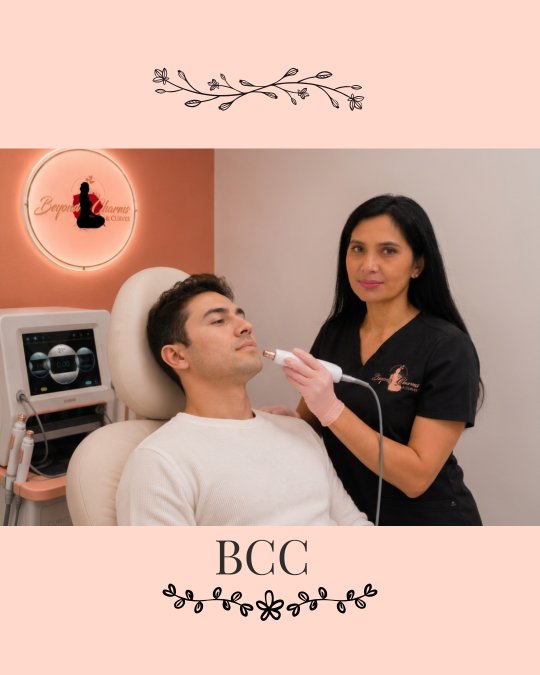
Radiofrequency (RF) technology delivers electrical energy deep into the skin, heating the dermis and triggering immediate collagen contraction and new collagen production. RF works well for moderate skin laxity on the face, neck, and body in 30-45 minute sessions. Built-in cooling protects the surface while heating deeper layers. Results appear within 2-4 weeks with continued improvement over several months. Most people need annual maintenance sessions to sustain results.
Ultrasound-Based Skin Tightening
Micro-focused ultrasound energy creates precise thermal zones at specific depths, targeting the dermal and subcutaneous layers without affecting the surface. Ultrasound-based non-invasive skin tightening is particularly effective for the neck, jawline, and brow in 30-60 minute sessions. Its precision targets skin laxity in areas where accuracy matters, with results developing gradually over 2-3 months as collagen remodels.
Laser Resurfacing and Skin Tightening
Laser treatments deliver focused light energy that heats the skin and stimulates collagen production. Ablative lasers remove the outer layer; non-ablative lasers heat the dermis without removing the epidermis. Laser resurfacing addresses fine lines, wrinkles, and texture while providing tightening. Non-ablative lasers have minimal downtime while ablative lasers require more recovery. Results appear quickly, fine lines often improve within days, with tightening continuing over months.
Intense Pulsed Light (IPL) Therapy
IPL uses broad-spectrum light energy to heat the dermis and stimulate collagen production, providing skin rejuvenation and subtle tightening. It works best for mild to moderate skin laxity combined with age spots, redness, or uneven texture in 20-30 minute sessions. Most people return to normal activities immediately. Results develop gradually over weeks with a series of 4-6 treatments spaced 3-4 weeks apart.
Is Skin Tightening Painful?
Most non-invasive skin tightening treatments cause minimal discomfort, patients typically describe sensations as warm or tingly rather than painful. Radiofrequency feels like gentle warmth, ultrasound like brief pressure pulses, and laser or IPL like mild snapping or tingling. Your provider can apply numbing cream to minimize discomfort. You'll be awake and able to communicate, so tell your provider immediately if something feels uncomfortable. Most people find the procedure tolerable enough to return for follow-up sessions.
How Long Does Non-Invasive Skin Tightening Last?
Results from non-invasive skin tightening treatments are not permanent because your skin continues to age naturally. Improvements typically last 6-12 months, with longevity depending on which treatment you choose, your age, skin quality, and sun protection. Most people benefit from maintenance sessions once or twice per year to sustain results. Beyond Charms & Curves can help you develop a maintenance plan tailored to your goals.
Preparing for a Medical Spa Skin Treatment
Avoid sun exposure for at least one week before your appointment, sunburned or deeply tanned skin reacts unpredictably to energy-based treatments. Stop using retinoids, vitamin C serums, and other active ingredients 3-5 days before treatment as they increase skin sensitivity. Avoid blood-thinning medications and supplements like aspirin, ibuprofen, and fish oil for several days before (check with your doctor first), and skip alcohol for 24 hours before treatment. On appointment day, arrive with clean skin and no makeup or products, wear comfortable loose clothing, and bring sunglasses for facial treatments.
What to Expect: Results and Recovery Timeline
Recovery from non-invasive skin tightening is one of its biggest advantages, most treatments let you return to work and normal activities the same day or next day, though timelines for visible results vary by treatment type.
Immediate Recovery: What Happens Right After Treatment
Immediately after treatment, you might notice mild redness, slight swelling, or warmth that typically fade within hours to 24 hours. Some treatments cause temporary dryness or flaking as the skin heals. Understanding each treatment's recovery profile helps you plan your schedule.
Radiofrequency (RF): Mild redness resolves within 2-4 hours. You can apply makeup and return to work the same day. Slight swelling may persist for 24 hours.
The Realistic Results Timeline: When You'll Actually See Changes
Results develop gradually over weeks and months as collagen remodels, not dramatic overnight changes like a surgical facelift. You'll notice gradual improvement in skin firmness, fine lines, and texture. Understanding this timeline manages expectations.
Recovery Timeline Comparison Table
| Treatment Type | Same-Day Downtime | Return to Work | Return to Exercise | Initial Results | Full Results |
|---|---|---|---|---|---|
| Radiofrequency | Mild redness (2-4 hrs) | Same day | Same day or next day | 2-4 weeks | 3-6 months |
| Ultrasound | Minimal redness (1-2 hrs) | Same day | Same day | 2-3 weeks | 3-6 months |
| Non-ablative laser | Mild-moderate redness (24-48 hrs) | Same day | 24-48 hours | 1-2 weeks | 2-3 months |
| IPL | Minimal redness (1-2 hrs) | Same day | Same day | 2-4 weeks | 3-6 months |
Planning Around Your Schedule
If you have an important event in the next 48 hours, IPL or radiofrequency are your safest bets, downtime is minimal and redness fades quickly. If you have a week before your event, non-ablative laser becomes an option because any redness will have resolved. If you're planning a series of treatments, space them 4-6 weeks apart so you see results from one treatment before starting the next.
Choosing the Right Treatment for Your Skin
The best non-invasive skin tightening treatment depends on your skin type, treatment area, downtime tolerance, goals, and skin tone, the last factor is often overlooked but critically important for safety and results.
Skin Tone Considerations: Why This Matters
Not all skin tightening technologies work equally well across all skin tones. Some carry higher risks of hyperpigmentation (darkening) or hypopigmentation (lightening) in darker skin. Understanding which treatments are safest for your skin tone prevents complications and ensures better results.
Treatment Selection by Concern and Skin Type
For mild to moderate skin laxity with minimal downtime: Radiofrequency works well across all skin tones with same-day recovery.
Skin Sensitivity and Condition Factors
Sensitive skin: IPL and non-ablative laser are gentler. Radiofrequency is well-tolerated because cooling protects the surface. Ultrasound can feel more intense but is generally safe.
The Consultation: Your Most Important Step
Schedule a consultation with a qualified provider who should assess your skin tone and discuss which technologies are safest for you, examine your skin laxity, discuss your goals and realistic expectations, explain recovery timelines, answer questions about results and maintenance, and recommend a tailored treatment plan. If a provider doesn't discuss your skin tone or seems unfamiliar with your skin type, seek a provider with demonstrated experience treating diverse skin tones.
Frequently Asked Questions
Is there a non-invasive skin tightening treatment that actually works?
Yes. Radiofrequency, ultrasound, and laser treatments have clinical evidence supporting their ability to stimulate collagen production and improve skin laxity. Results vary based on skin type, age, and the specific technology used. Most people see gradual improvement in skin texture and firmness over 2-3 months, with best results after a series of sessions. A consultation with a qualified medical provider can help determine which treatment matches your skin condition and goals.
How long do results from non-invasive skin tightening last?
Results typically last 6-12 months, depending on the treatment type and your skin's natural aging process. Maintenance sessions every 6-12 months help sustain collagen remodeling and skin elasticity. Your provider can recommend a personalized maintenance schedule based on your treatment response.
Are non-invasive skin tightening treatments safe for all skin types?
Most non-invasive treatments work safely on a range of skin types, but suitability depends on the specific technology. Darker skin tones may require adjusted settings for laser and IPL therapies to avoid complications. Radiofrequency and ultrasound-based treatments are generally safer across all skin types. A consultation with a licensed medical provider is essential to assess your skin type and recommend the safest, most effective option for your needs.
What is the difference between radiofrequency and ultrasound skin tightening?
Radiofrequency uses thermal energy to heat the dermal layers and stimulate collagen production across a broader area, making it effective for large facial regions. Ultrasound-based treatments use micro-focused sound waves to target deeper subcutaneous tissue with precision, offering more concentrated results. Your skin condition and treatment goals determine which approach works best for you.